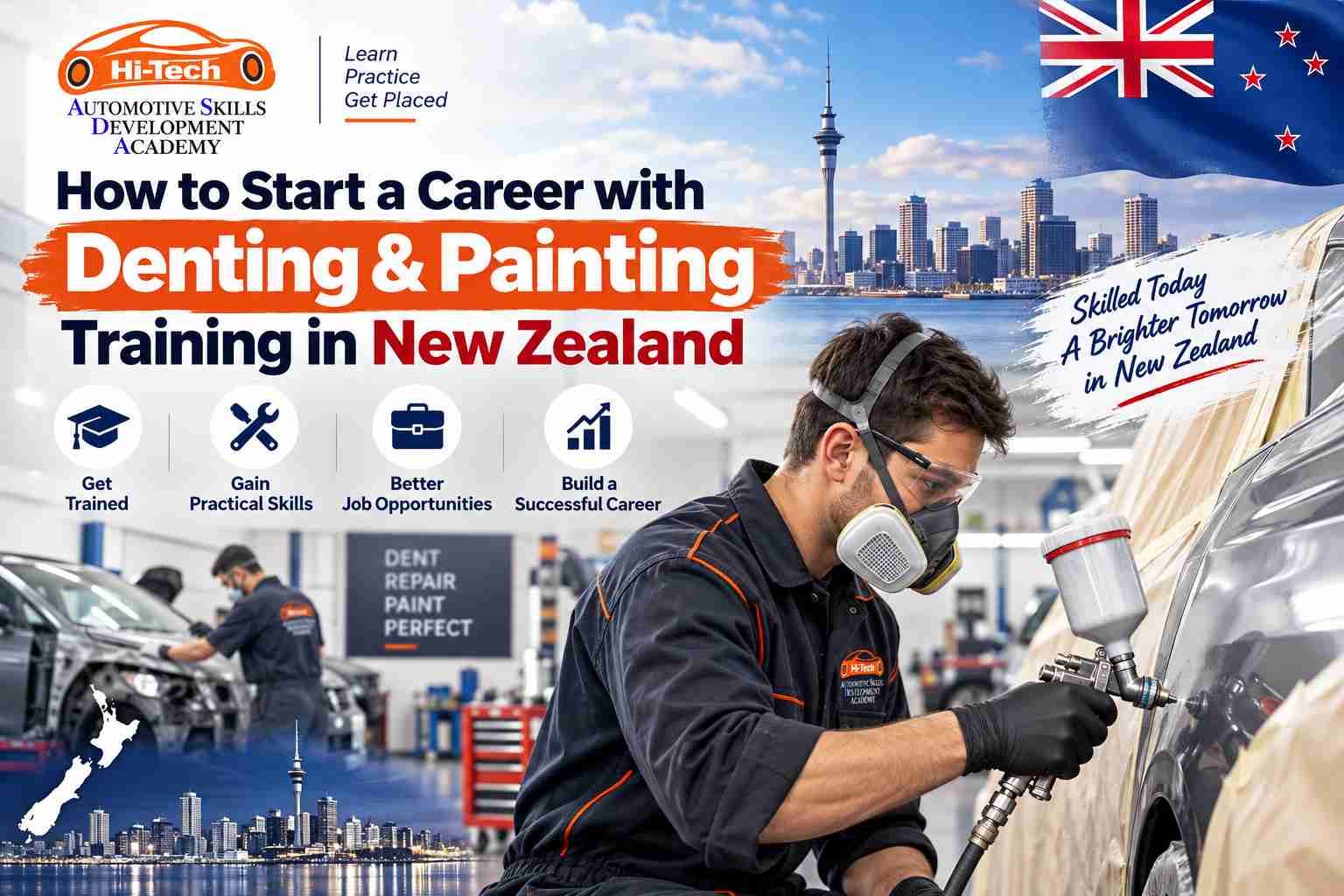
How to Start a Career with Denting & Painting Training in New Zealand
Do you like working with your hands and fixing things? Do you enjoy cars? If yes, a career in denting and painting could be perfect for you. This job is also called panel beating, auto body repair, or automotive refinishing. It is one of the most in-demand trade jobs in New Zealand.
In this guide, we will explain everything a student needs to know about Denting & Painting Training in New Zealand. You will learn what the job involves, which skills you need, where to study, how much it costs, how much you can earn, and how to pick the right course. The language is kept simple so any student can understand it easily.
What Does a Denting & Painting Career Look Like in New Zealand?
A denting and painting career means fixing damaged cars and making them look new again. People who do this job are called panel beaters, auto body repairers, or automotive spray painters. This work is also known as Automotive Collision Repair Training or Panel Beating Training in New Zealand.
A panel beater's daily work includes:
-
Checking a damaged car to find out what needs fixing
-
Removing dents from the car body
-
Replacing broken parts like bumpers, doors, or fenders
-
Sanding the surface to prepare it for painting
-
Painting the car to match its original colour
-
Checking the finished repair to make sure it is smooth and safe
This career is in steady demand. Cars get damaged every day, in every city, so workshops always need trained panel beaters and spray painters. After training, you can work in a small garage, a large collision repair centre, or start your own workshop once you have enough experience.
Skills You Need Before Starting Denting & Painting Training
You do not need to be an expert before joining a course. But having a few basic skills will help you learn faster and get more out of your training. The main skills that help in Automotive Dent Repair Training and Car Painting Training are:
-
Attention to detail — to spot small dents, scratches, and colour differences
-
Steady hands — for smooth sanding, filling, and spray painting
-
Basic maths — for measuring panels and mixing paint correctly
-
Physical fitness — for standing, bending, and lifting parts through the day
-
Patience — since some repairs need slow, careful work
-
Teamwork — most workshops train and work in small teams
-
Basic English — to follow safety instructions and talk with customers
-
Hand-eye coordination — for controlling spray guns and hand tools accurately
-
Problem-solving skills — to figure out the best way to fix an unusual dent or damage pattern
-
Comfort with tools and machines — sanders, grinders, and spray equipment become part of daily work
-
Willingness to follow safety rules — for handling paint fumes, chemicals, and power tools correctly
-
Time management — workshops often work to repair deadlines set by customers or insurance companies
-
A genuine interest in cars — it keeps you motivated through the more repetitive parts of training
Tip for students: You do not need your own tools or any workshop experience before you join. Training institutes teach everything from the ground up, including how to use tools safely.
New Zealand's Top Denting and Painting Training Facilities
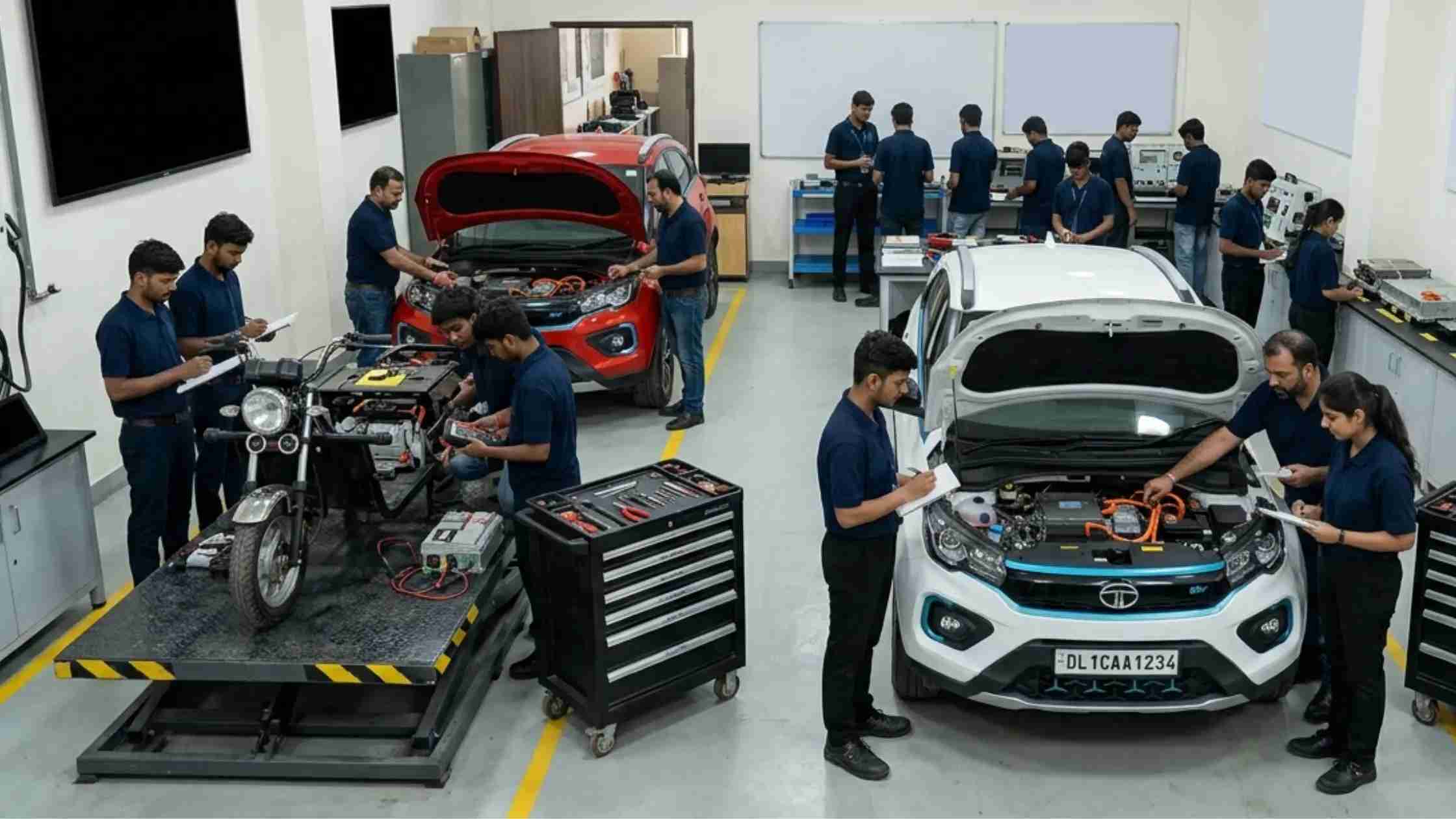
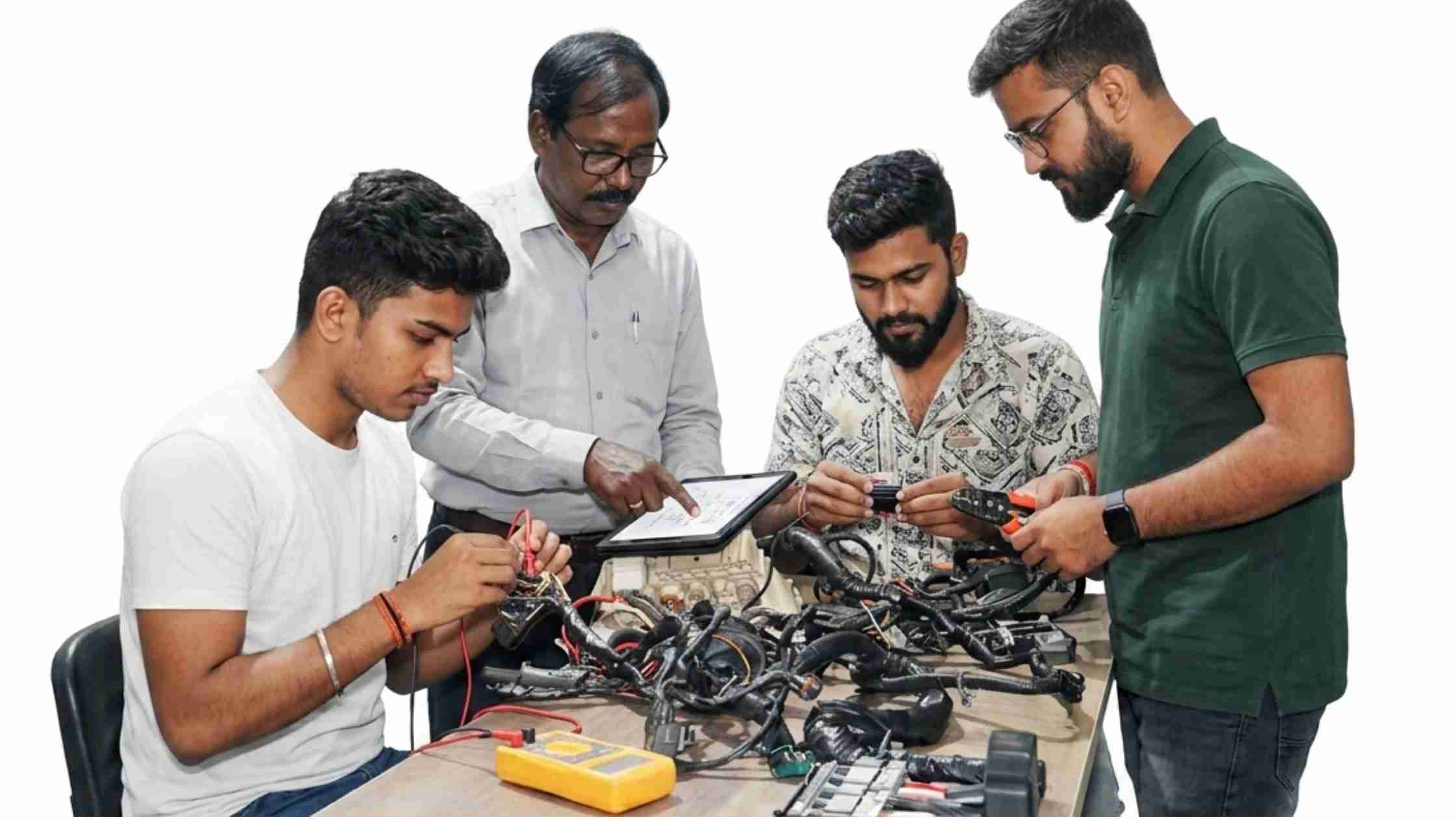
ECM Repair Training India is a dedicated automotive and electrical repair training academy, helping students build strong foundational skills before stepping into advanced auto body and collision repair careers abroad. The academy offers hands-on, practical training programs designed for beginners, covering essential automotive and electrical repair concepts through a structured mix of theory and workshop practice. Students who complete this foundational training often find it easier to grasp advanced panel beating, spray-painting, and collision repair courses when they later enrol in New Zealand's certificate programs. To learn more about their courses and training approach, visit ECM Repair Training India.
Palmerston North's Universal College of Learning (UCOL)
Offers the New Zealand Certificate in Automotive Repair and the New Zealand Certificate in Collision Repair and Automotive Refinishing, covering panel beating and spray-painting basics.
Ara Institute of Canterbury — Christchurch
Offers the New Zealand Certificate in Collision Repair and Automotive Refinishing (Level 3), plus a shorter beginner-friendly panelbeating course.
Southern Institute of Technology (SIT)
Runs the same nationally recognised Level 3 qualification, with strong practical workshop hours.
WelTec / Te Pūkenga (Wellington region)
Offers an entry-level collision repair certificate and a follow-on Level 3 refinishing certificate focused on spray-painting.
Besides these institutes, many students also enter the trade directly through an apprenticeship with a panel beating or collision repair workshop. Employers often support apprentices to complete the same nationally recognised qualifications while they work and earn.
How Much Does Denting & Painting Training Cost in New Zealand?
Course fees depend on the institute, the qualification level, and whether you are a domestic student or an international student. Here is a general idea, based on published fee information from New Zealand institutes:
|
Course Type |
Domestic Fee (approx.) |
International Fee (approx.) |
|
Level 3 Collision Repair & Refinishing Certificate |
NZD 2,400 – 3,800 (per year/semester) |
NZD 13,000 – 14,000 |
|
Short/entry panelbeating course |
NZD 1,000 – 1,100 |
Varies by institute |
|
Level 4 advanced refinishing certificate |
NZD 3,000 – 7,700 |
Contact institute |
Many domestic students in New Zealand can also study their first year of a course under the Fees Free scheme, which means the tuition fee can be zero if they qualify. It is always best to check the exact fees and any scholarships directly on the institute's website before you apply, since fees change every year.
How to Sign Up for a Denting and Painting Course Step-by-Step
-
Choose your course – Decide between a full Auto Body Repair Skills Training certificate or a shorter introductory course.
-
Check entry requirements – Most Level 3 courses ask for basic NCEA Level 1 numeracy and literacy credits if you are under 20. Students over 20 may qualify through special admission.
-
Pick your institute – Compare location, fees, and course start dates.
-
Apply online – Fill out the enrolment form on the institute's official website. You may need ID, school records, and proof of English ability if English is not your first language.
-
Check for Fees Free or scholarships – See if you qualify for free or reduced tuition.
-
Attend orientation – Most institutes hold an induction day before classes begin.
-
Start learning – Classes usually mix classroom theory with hands-on workshop practice.
Certifications That Boost Your Denting & Painting Career
Certifications show employers that you have real, tested skills. In New Zealand, the main certifications for this trade are:
-
New Zealand Certificate in Collision Repair and Automotive Refinishing (Level 3) – the standard starting qualification
-
New Zealand Certificate in Collision Repair – Non-Structural Repair (Level 4) – for advanced panel beating skills
-
New Zealand Certificate in Automotive Refinishing (Level 4) – for advanced spray-painting and refinishing skills
-
New Zealand Certificate in Automotive Repair (Level 3) – broader automotive repair knowledge, including panel work
Completing a Level 3 certificate is usually enough to start an apprenticeship. Moving up to Level 4 certifications later can help you earn more and take on senior or specialist roles.
How Much Can You Earn After Denting & Painting Training?
Pay in this trade grows steadily with experience. Based on current New Zealand job listings, here is a realistic pay guide:
|
Experience Level |
Typical Hourly Pay |
Approx. Yearly Pay (full-time) |
|
Apprentice / entry-level |
NZD 24 – 28 |
NZD 50,000 – 58,000 |
|
Experienced panel beater / painter |
NZD 30 – 45 |
NZD 62,000 – 90,000 |
|
Senior / estimator / specialist roles |
– |
NZD 85,000 – 100,000+ |
Pay can also depend on the city, the size of the workshop, and how specialised your skills become. Panel beaters who also learn advanced spray painting or work with high-value vehicles often earn on the higher end.
Job Opportunities After Completing Denting & Painting Training
Once you complete your Vehicle Refinishing Training or collision repair certificate, several career paths open up, such as:
-
Panel Beater
-
Auto Body Painter / Automotive Spray Painter
-
Automotive Refinishing Technician
-
Collision Repair Technician
-
Vehicle Component Remover/Refitter (entry-level role)
-
Repair Estimator (after gaining experience)
-
Workshop Supervisor or Manager (long-term career growth)
-
Self-employed workshop owner
Because collision repair skills are needed all over the country, trained workers can find jobs in Auckland, Wellington, Christchurch, Hamilton, Tauranga, and smaller towns too. Many employers also support further study while you work.
Denting & Painting Training vs Learning on the Job: Which Is Better?
Some students wonder if they should join a formal Car Dent Removal Course or just learn by working in a garage. Both paths can lead to a good career, but they are different:
|
Formal Training |
Learning on the Job Only |
|
Structured lessons cover all basics step by step |
You learn only what your workplace needs right now |
|
You get a recognised national certificate |
No formal certificate unless your employer arranges one |
|
Safer learning environment for beginners |
Mistakes on real customer cars can be costly |
|
Easier to switch employers later with proof of skill |
Skills may not transfer easily without a certificate |
|
May take time and cost some tuition fees |
You earn money from day one as an apprentice |
In practice, the strongest career path combines both. Most students complete a Level 3 course first and then continue learning through a paid apprenticeship. This way, you graduate with a certificate and real workshop experience.
Use this checklist before you pick a course:
-
Is it a nationally recognised qualification? Look for "New Zealand Certificate" courses listed on the NZQA framework.
-
What does the course cover? Make sure it includes both panel repair and spray-painting basics, not just one skill.
-
How much practical workshop time is included? More hands-on hours usually means better job-readiness.
-
What is the total cost, and are you eligible for Fees Free?
-
Does it lead to an apprenticeship? A course that connects you with industry partners can help you get a job faster.
-
Is the location realistic for you? Choose an institute close to home, or check if part-time and block options are available.
-
Do you have a strong foundation before you start? If you're new to automotive repair, building basic skills first through a program like ECM Repair Training India can help you get more out of an advanced course once you enrol.
Taking time to compare these points will help you avoid wasting money on the wrong course and get you closer to a real job faster.
Frequently Asked Questions
Do I need prior experience to join a denting and painting course in New Zealand?
No. Most Level 3 courses are designed for beginners and teach every skill from the basics, including tool use and safety.
How long does denting and painting training take?
An entry-level Level 3 certificate usually takes around one year full-time, or longer if studied part-time alongside work.
Can international students join Panel Beating Training in New Zealand?
Yes, most institutes accept international students, though fees are higher than for domestic students and a study visa is required.
Is denting and painting a good career for students?
Yes. It offers steady demand, a clear certification path, on-the-job earning through apprenticeships, and room to grow into higher-paying specialist roles.
What is the difference between panel beating and automotive refinishing?
Panel beating focuses on repairing the metal body of the car, such as removing dents and replacing panels. Automotive refinishing focuses on preparing the surface and applying paint to match the original finish.