How to Start an EV Vehicle Training Program in India: A Complete Guide
Electric vehicles are not just a future idea anymore. They are already on Indian roads.
You see EV cars every day now. EV bikes too. Even EV autorickshaws are common in most cities.
This change has created a real need. India needs trained EV technicians, and fast.
If you want to build a career in this field, start here. An EV vehicle training program in India is the right first step.
This guide covers everything you need. What the program is. Who can join. What you will learn. And how to enroll.
What is an EV Vehicle Training Program?
An EV vehicle training program teaches you two things. How electric vehicles work. And how to repair them.
It focuses on the parts that make an EV different from a petrol or diesel vehicle. That means the battery. The motor. The controller. And the charging system.
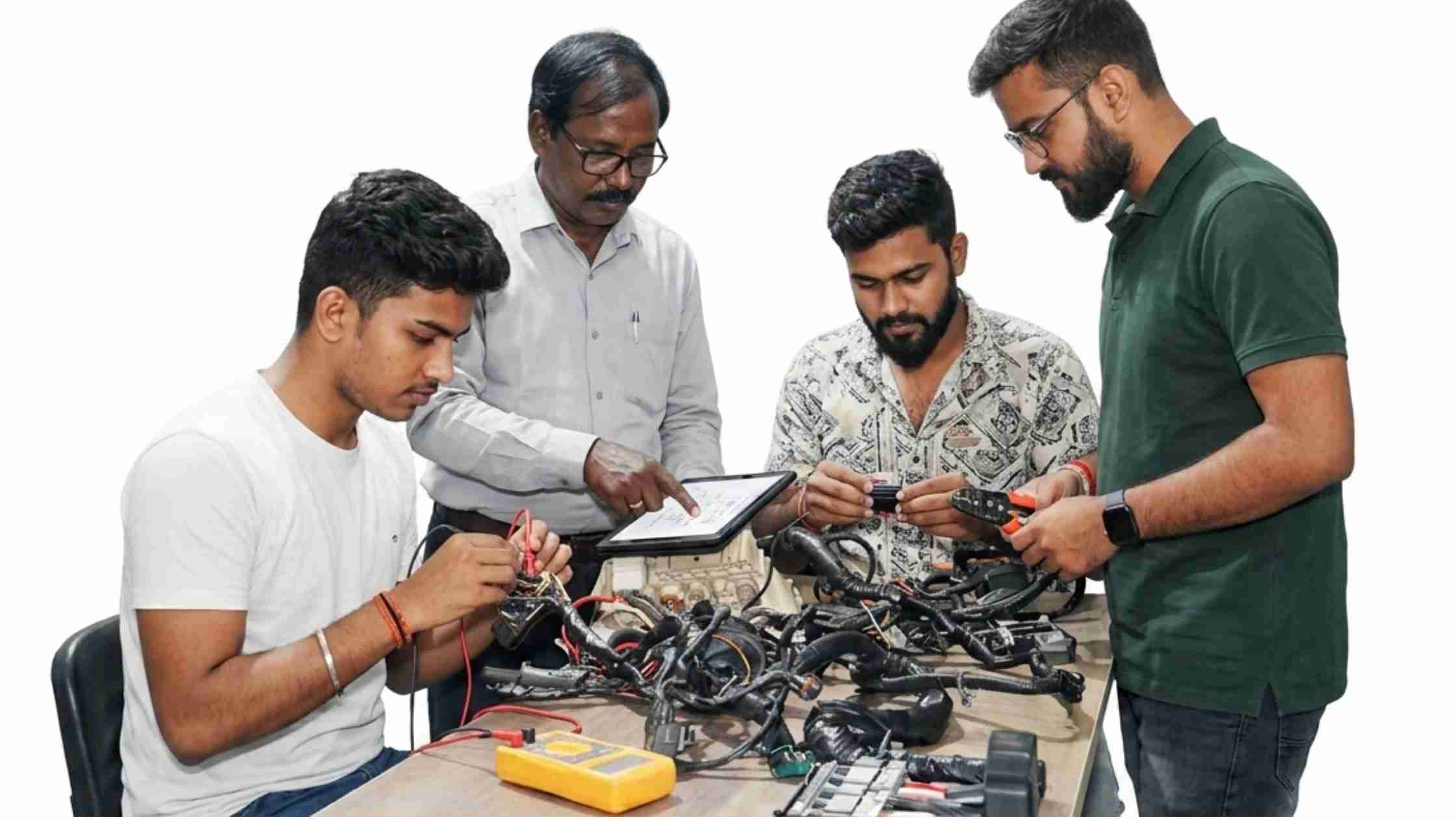
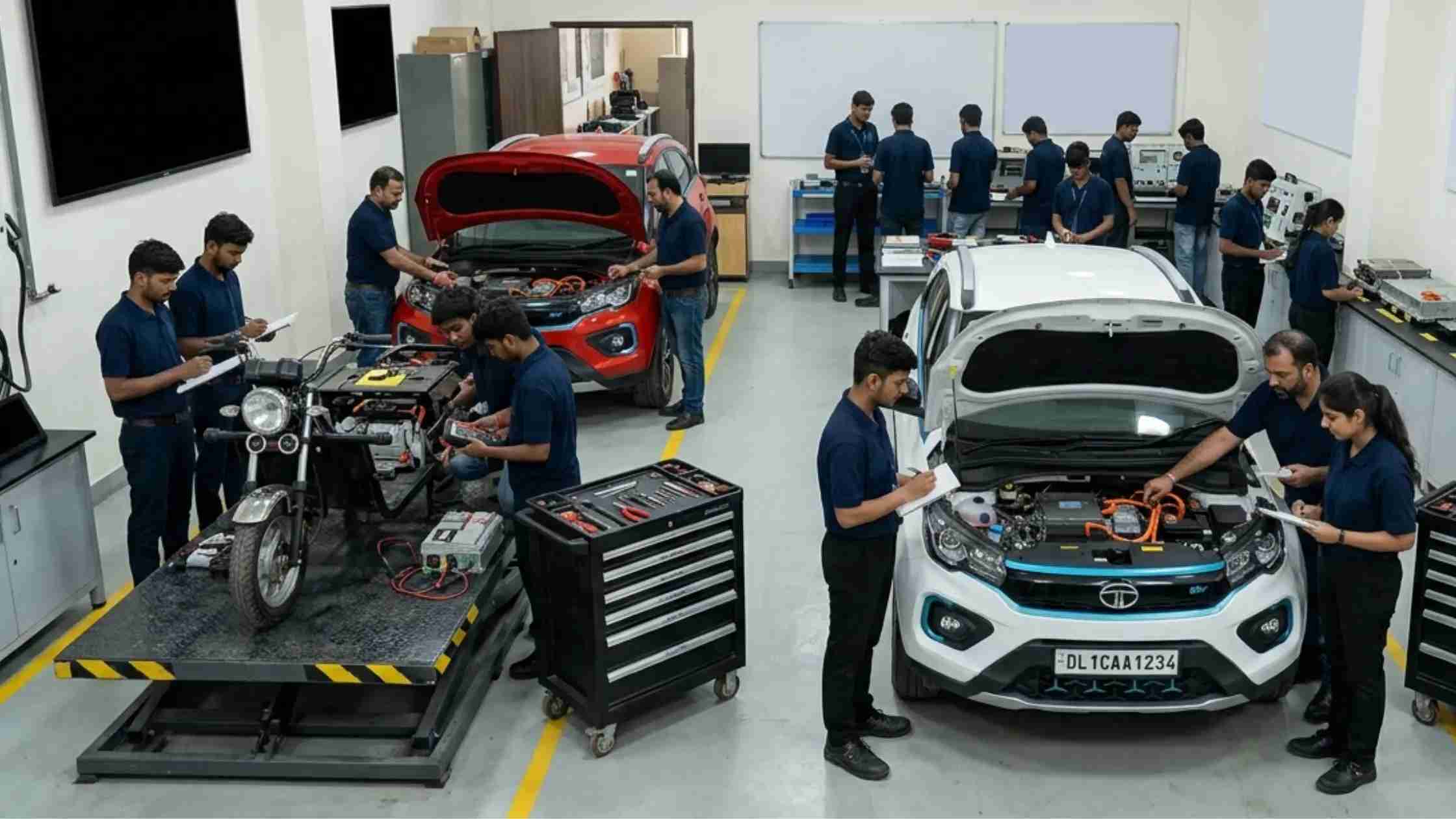
A good EV training program is not just theory. It's hands-on practice too. You don't just read about EVs. You open them up. You test them. You fix real faults on real vehicles.
This makes EV training different from general automobile repair training. Petrol and diesel engines run on mechanical parts. EVs run on electronic systems, sensors, and battery technology. That's a different skill set. That's why EV training needs its own dedicated syllabus.
Why is EV Vehicle Training Important in India?
India's EV market is growing fast. More EV cars are selling every year. More EV bikes too. And EV autorickshaws are becoming common, in cities like Delhi and industrial hubs like Ludhiana.
But there's a gap. Not enough technicians know how to service these vehicles properly.
Regular mechanics often struggle here. They know petrol and diesel engines well. But EV faults are different. Controller circuits, charger systems, battery diagnostics — most regular mechanics don't understand these. That's a problem for EV owners. And it's an opportunity for you.
This is why EV vehicle training matters right now. The skill gap is still open. Get trained early, and you're ready before the demand peaks.
Who is Eligible for an EV Vehicle Training Program in India?
Most EV vehicle training programs in India keep the entry requirements simple. You don't need an engineering degree to join.
Here's what generally works:
- Basic school education (10th or 12th pass)
- An interest in vehicles, electronics, or mechanics
- No prior electronics background required in most cases
Some institutes start from the basics. Hi-Tech Automotive Skills Development Academy in Khanna, Punjab, is one of them. So even if you've never touched a circuit board before, you can still join. You'll learn step by step.
This makes EV training genuinely open. It works for students. It works for existing automobile mechanics who want to upgrade. And it works for working professionals looking for a career change.
What is the Syllabus of an EV Vehicle Training Program?
A well-structured EV vehicle training program syllabus is usually broken into modules. Here's what a complete syllabus generally includes:
EV Vehicle Module
- Introduction to EV technology and why it matters
- Modules used inside electric vehicles
- Sensors and actuators in EVs
- EV wiring schematics and harness design
- 48V system challenges and diagnostics
- Battery technologies used in EVs
- Real-time fault finding techniques
- EV troubleshooting procedures
EV Controller Module
- Fundamentals of EV controllers
- Architecture and working principles
- Key components and their functions
- Circuit tracing inside EV controllers
- Component identification, functionality, and testing
- Common faults and diagnostic techniques
- Controller troubleshooting workflow
EV Charger Module
- Overview of EV charging technology
- Working of EV chargers and power supply design
- Components used inside chargers
- Circuit analysis and tracing techniques
- Component testing procedures
- Diagnosis of common charging system failures
- Charger repair and maintenance best practices
This kind of structure ensures you don't just learn one part of the EV. You learn the vehicle, the controller, and the charger, which together cover most real-world EV repair work.
What Skills Do You Learn in EV Vehicle Training?
By the end of a proper EV vehicle training program, you should be able to:
- Read and understand EV wiring diagrams
- Identify and test sensors and actuators
- Diagnose faults in EV controllers using circuit tracing
- Test and troubleshoot EV charger components
- Understand battery technology used in electric vehicles
- Handle 48V system diagnostics safely
- Apply real-time fault finding methods on actual vehicles
These are practical, job-ready skills. Not textbook theory. They're built through hands-on practice, not just classroom lectures.
How Long Does EV Vehicle Training Take to Complete?
The duration of an EV vehicle training program depends on two things. The institute. And how deep the syllabus goes.
Most focused, hands-on EV programs in India run for a few weeks to a few months. Some institutes combine EV training with broader automobile or electrical training. Those courses usually run longer.
If you're planning to join, ask the institute directly. Get the exact course duration. Check the batch timings. Find out if it's full-time or part-time. This helps you plan around your current job or studies.
Which Are the Best EV Vehicle Training Institutes in India?
When you're choosing an EV vehicle training institute in India, look for a few things. Hands-on training with real EV components. Experienced instructors. And a proper certificate on completion.
Hi-Tech Automotive Skills Development Academy is one such institute. It's located in Khanna, Punjab, and offers a dedicated EV Vehicle Training Program. The academy started in 1970. Jaswant Singh led the institute. He trained at KT Service Station in Sector 17, Chandigarh, before building the academy's own training programs.
The EV program here covers three modules. The EV Vehicle Module. The EV Controller Module. And the EV Charger Module. All with hands-on sessions on real vehicles and components. Students come from Delhi, Ludhiana, and across India. Outstation students also get help with nearby accommodation and meals, at an average cost of ₹6,500 to ₹7,000 per month, including basic room facilities and homely meals.
When you're comparing institutes, ask three things. Their curriculum. Their instructors' real-world experience. And whether the certificate they offer is recognized.
Do You Get a Certificate After EV Vehicle Training?
Yes. Most reputable EV vehicle training programs in India provide a certificate after successful completion.
At Hi-Tech Automotive Skills Development Academy, students receive a certificate once they finish the course. This certificate works as proof of your training. You can use it when you apply for jobs. Or when you start your own EV repair setup.
Before enrolling anywhere, confirm one thing. Is the certificate government-approved or industry-recognized? This detail matters when employers review your application.
What Career Opportunities Are Available After EV Vehicle Training in India?
Once you complete an EV vehicle training program, several career paths open up:
- EV service technician at authorized EV service centers
- Independent EV repair shop owner, servicing EV cars, bikes, and autorickshaws
- EV fleet maintenance technician for companies running electric delivery or cab fleets
- Charging station technician, maintaining and troubleshooting EV chargers
- Freelance EV mechanic, offering home or on-site repair services
EVs need specialized diagnosis and repair. That's the key point. Trained technicians are in a better position than general mechanics to take up these roles.
What is the Salary of an EV Technician in India?
EV technician salaries in India vary. It depends on location. It depends on experience. And it depends on whether you work for a company or run your own repair setup.
Entry-level EV technicians usually start with a modest monthly salary. Similar to other skilled automobile trades. But as you gain hands-on experience, things change. Build a track record with faults you've successfully diagnosed and fixed, and your earning potential grows.
Some technicians go independent. They open their own EV repair centers, especially in growing EV markets like Delhi and Ludhiana. These technicians often earn more. They charge per service, not a fixed salary.
How Can You Enroll in an EV Vehicle Training Program in India?
Enrolling in an EV vehicle training program is usually straightforward.
At Hi-Tech Automotive Skills Development Academy, you can enroll in any of these ways:
- Call: +91-88726-46155
- WhatsApp: Message directly to ask about batches and fees
- Visit in person: Near U.K. Palace, G.T. Road, Khanna, Punjab – 141401
One tip before you go. Call ahead. Ask about the next batch start date. Ask about course fees. And check whether accommodation support is available, if you're coming from outside Khanna.
Is EV Vehicle Training Worth It in 2026?
Yes. EV vehicle training is worth it in 2026. Here's why.
EV adoption in India is still rising. It's not slowing down. Cities are adding EV cars, bikes, and autorickshaws every year. Government incentives continue to support electric vehicle adoption. And here's the most important part: there still aren't enough trained EV technicians to match this growth.
That gap is your opportunity. Get trained now, and you build a skill that's in demand today. It will likely stay in demand for years, as more petrol and diesel vehicles get replaced by electric ones.
What is the Difference Between EV Training and Traditional Automobile Training?
Traditional automobile training focuses on mechanical systems. Engines. Fuel systems. Transmissions. Exhaust systems.
EV training focuses on electronic and electrical systems instead. Batteries. Motors. Controllers. Wiring harnesses. Charging systems.
The difference shows up in real work. A traditional mechanic knows how to fix a fuel pump or an engine belt. An EV technician knows how to trace a controller circuit or diagnose a battery fault. Same industry, different skill set. The tools are different. The diagnostic approach is different. The underlying knowledge is different too, even though both fall under "automobile repair."
This is exactly why a dedicated EV vehicle training program matters. It fills the specific gap that general automobile training doesn't cover.
|
Aspect |
Traditional Automobile Training |
EV Vehicle Training |
|
Core focus |
Mechanical systems |
Electronic and electrical systems |
|
Key components covered |
Engines, fuel systems, transmissions, exhaust systems |
Batteries, motors, controllers, wiring harnesses, charging systems |
|
Common repair work |
Fixing a fuel pump, replacing an engine belt |
Tracing a controller circuit, diagnosing a battery fault |
|
Diagnostic approach |
Mechanical inspection and testing |
Circuit tracing and electronic fault finding |
|
Best suited for |
Petrol and diesel vehicles |
Electric vehicles (cars, bikes, autorickshaws) |
FAQs: EV Vehicle Training Program in India
Q. Do I need prior electronics knowledge to join an EV vehicle training program?
Ans. No. Most institutes, including Hi-Tech Automotive Skills Development Academy, start with the basics, so beginners can join without prior electronics experience.
Q. Is a certificate provided after completing EV vehicle training?
Ans. Yes. Institutes typically issue a certificate after successful course completion, which you can use when applying for jobs.
Q. Where can I do EV vehicle training in Punjab or nearby North India?
Ans. Hi-Tech Automotive Skills Development Academy in Khanna, Punjab, offers a dedicated EV Vehicle Training Program and also serves students from Delhi and Ludhiana.
Q. Is accommodation available for outstation students?
Ans. Yes, at Hi-Tech Automotive Skills Development Academy, food and accommodation are arranged for outstation students, at an average cost of ₹6,500 to ₹7,000 per month.
Q. How do I enroll in the EV Vehicle Training Program?
Ans. You can enroll by calling +91-88726-46155, messaging on WhatsApp, or visiting the academy in Khanna, Punjab.